20 December 2013

Star Wars Year

Some time ago, probably last year, I said that I was not going to read a Star Wars novel. This was based on my bias on cheaply exploited franchises, even though I've played some games and had some comic books over the years. But books I thought it was too much.
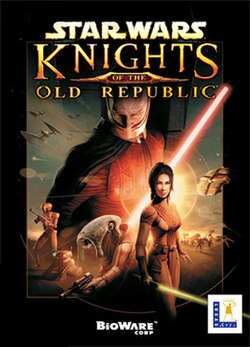

In 2010 I played two Star Wars based games (Knights of the Old Republic I and II) which were very good, in particular the first one (being one of the best games I've ever played, so it's highly recommended). The timeline of these two games is 3000 years before the original story (movies). This gave the stories great independence without losing the Star Wars feeling. Now that I remember, I also played two space flight games based on Star Wars (X-Wing and Tie Fighter) in the 90's.
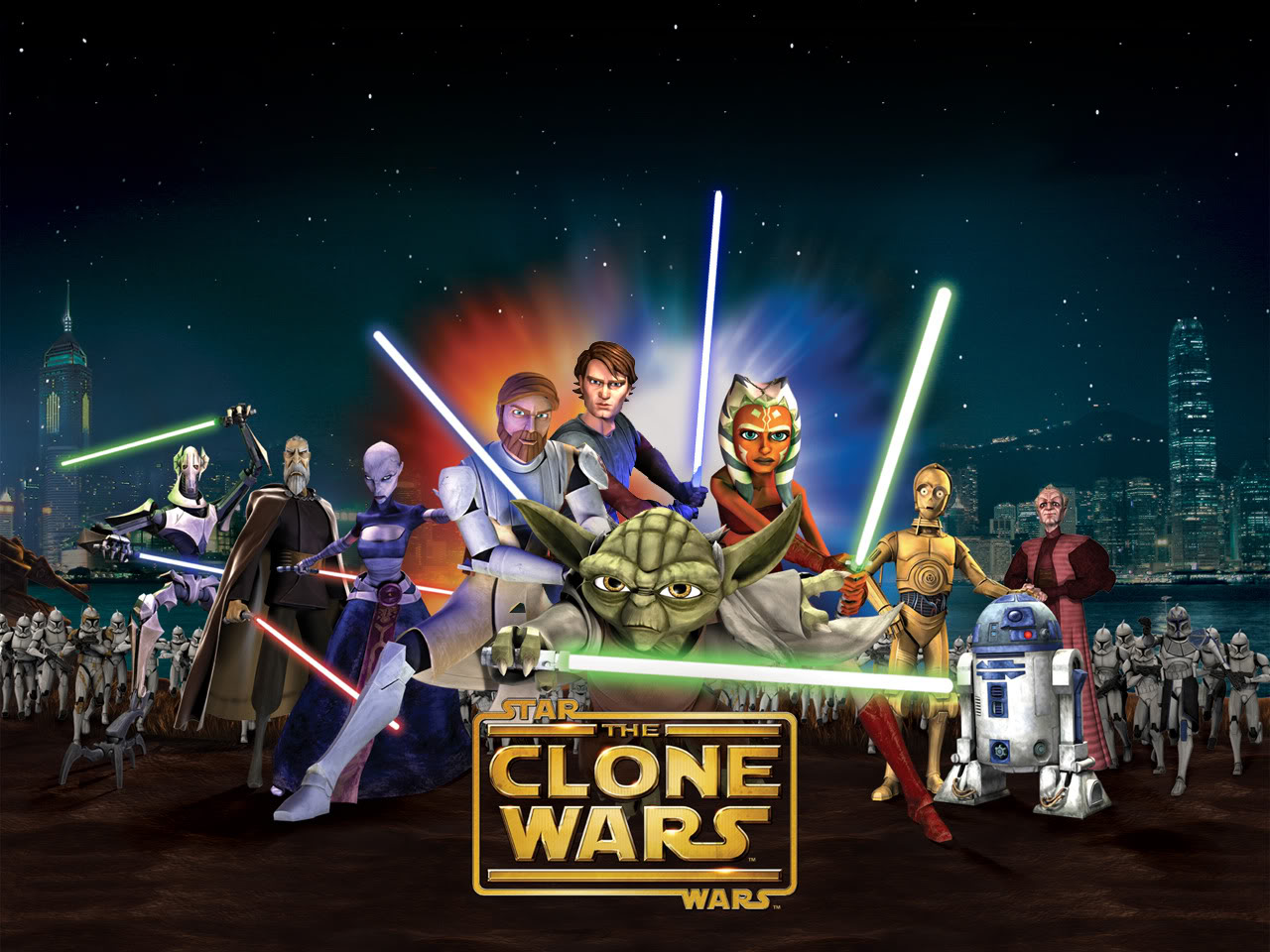

This situation changed, rather drastically, when in January I happened to watch a couple of episodes of the Cartoon Network "Star Wars: The Clone Wars" animated TV series. I really liked it and started to watch it from the beginning once I was back in Germany. After that I was hooked with the Star Wars universe. I went on an replayed the two videogames and then read books linked with the Old Republic time frame. Then I played another videogame in the Clone Wars time frame (Republic Commando), which led to read a whole series of the Republic Commando. A very nice series, a war drama dressed with the Star Wars universe elements, sadly the ending is not really a proper one. This totals 8 Star Wars based books during this year.


After all this, I was still hooked to this universe. A couple of years I played as a beta tester the massive multiplayer online game of Star Wars: The Old Republic. Since it's launch, I avoided getting near it knowing it would be a time sink-hole for me. But now I couldn't resist it and succumbed to the temptation and started playing. Interesting and gorgeous landscapes, although not as good as a game (storywise) than the Knights of the Old Republic.

Probably I'll continue to read some novels and play some games in the future, but still being rather selective on that and mostly steering away from content too close to the original movies, since I believe the expanded universe is much more mature and more "Star Wars"-like than the original stuff.

16 December 2013

El año de los juegos de mesa

Este año ha sido uno donde he podido explorar varios juegos de mesa. Esto en línea com mi intención para este año de jugar. Partiendo en Chile a principios de año donde pude jugar:

  • Quest for Middle Earth
  • Puerto Rico
  • Agricola
  • Arkham Horror

Ejemplo de una sesión social de juegos.
Carcassonne edición invierno.
Luego en Alemania donde en particular, en los últimos meses, he podido jugar regularmente en distintos tipos de eventos (sociales, pequeños grupos de amistades y grandes grupos). Entre los juegos que he podido disfrutar se encuentran:

  • Carcassonne
  • Ticket to Ride (USA, Deutschland, Europa)
  • Dominion
  • Alhambra
  • Kill Doctor Lucky
  • Resistance (notable jugarlo entre 9 jugadores)
  • Neuroshima Hex
  • Flux
  • Dixit
  • Love Letter
  • Kingdom Builder
  • Pandemic
  • Small World
y probablemente otros que no recuerdo sus nombres.

Espero poder continuar jugando durante el próximo año y descubrir más juegos interesantes y poder seguir compartiendo juegos con más gente. En particular me gustaría poder jugar nuevamente juegos de larga duración como Quest for Middle Earth o Arkham Horror.

He de agregar, que en varias ocaciones he jugado algunos juegos completamente en alemán (aunque en tales casos mi nivel de participación disminuye notoriamente como en el caso de Resistance). Esto es relativamente positivo ya que me sirve para practicar el idioma en un nuevo contexto.

Y si no juegan aún juegos, nunca es tarde para comenzar y compartir con gente ;).

23 September 2013

Riverside - We Got Used to Us


Riverside - We Got Used to Us

When I scroll back through our recent days
I try to understand
How we could forget
We made a promise to one another
That nothing would ever break what we had
Now we never talk when we fall apart
We never talk when we fall apart
We pretend were ok
Surrounding ourselves with one-way friendships
And so-called friends

I know we got used to new us
And I dont want to be there
I dont want to be there
Where we are
I know we got used to new life
And I dont want to be there
No, I dont want to be there
Where we are

Silence fallen between
All the doors are locked
All the words unsaid
And were still afraid of time
Started to keep ourselves
At a distance that we could control
Not too close
Not too far
Now we never talk when we fall apart
We just never talk when we fall apart
We pretend were ok
By filling up our inner space
With little hates
And so-called love

I know we got used to new us
And I dont want to be there
I dont want to be there
Where we are
I know we got used to new life
And I dont want to be there
No, I dont want to be there
Where we are

So walk away with me

18 September 2013

Sobre voto de los chilenos en el exterior

Yes in May to the Alternative Vote Ballot
Hoy se celebra un día importante en aras de la independencia de Chile (primera junta de gobierno [es|en]) del dominio de la corona española. Por estos días, también se está nuevamente hablando sobre el voto de chilenos en el extranjero.

Hay argumentos a favor y en contra al respecto, algunas bastante legítimas, otras bastante mezquinas y otras que no se nombran explícitamente. Pero la situación actual es bien particular y personalmente no la he visto nombrada. Esta situación, es endémica a la sociedad chilena y su notoria desigualdad.

Si bien no existe el voto en el exterior, la ley no prohíbe a nadie con ciudadanía chilena en votar si es que en el día de las elecciones se encuentra en su distrito/circunscripción de votación. Esto independiente de donde haya estado residiendo anterior de forma (semi)permanente. Esto implica, que si uno tiene los recursos para viajar a Chile por el día (o medio día), puede perfecta y legalmente ejercer su derecho a votar.

Probablemente, para aquellos que vivan, en Mendoza y voten en Los Andes, esto no necesariamente implica en una inversión de tiempo y recursos sustanciales. Pero esto rápidamente deja de ser así para quienes se encuentren a mayores distancias.

Entonces resulta, que para votar en Chile, no hay que vivir en el territorio nacional, ni pagar impuestos, ni tener un genuino interés (aunque si uno está dispuesto a hacer el viaje supongo que implica tener interés). Simplemente basta con tener los recursos. Al final, se reduce a un problema de dinero. Y eso no tiene mucha justificación moral.

Si existe derecho a voto para los chilenos en el extranjero, pero para ejercerlo hay que pagar por el.

11 September 2013

Book review: The Ringmaster's Gambit

As I said some time ago here, I was asked to write a review for an upcoming book. Since some weeks, it's posted on the Goodreads community and I'll copy it here. It is a short and simple review and without spoilers. Reading the other reviews, it seems that others share some of my opinions too.


I was in the lucky position to have read the first book in this series less than a month ago. Having said that, this book does not feel at all like a sequel but more like a completely new book in the same world. 

The book takes a more somber and serious tone, leaving aside almost all the fun and sarcasm of the storyteller. The story still has its fun moments, but as were the first book could be seen as a journey, this one is more like a big staging for something else.

It almost completely rescinds of the characters developed in the first part of the series. Thus a whole new set of characters are introduced comprised, mostly, by the magii and the forsaken races which were mentioned in the prequel. Unfortunately, I was not able to care about any of the new characters, but with the sporadic exception of the Ringmaster itself. 

Overall, it felt less confusing than the prequel, but it might be because I was more used. On the other hand it gets more complex as the factions playing the game are uncovered. It delivers a more intriguing plot, leaving the loose ends from the sequel almost untied and creating a whole bunch of new ones. That said, it also delivers an interesting account of some lore about the game and the players involved together with their intentions.

The whole saga is an ambitious project. I hope to be able to read the third part, sooner than later, and get closure on all the threads going on.

20 August 2013

Technology in the aid of the writing process (Part II)

As promised, I'll describe my current writing framework. Please keep in mind that I came up to this only a few weeks ago, and can be highly improved/refined. It is centered on two main elements: plain text files and a wiki. For the most part, if not all, the tool used come from good practices in software development.

To start with, I ditched all fancy writing assisting software (described in the previous part) and returned to the basics with a text editor. There are many to choose from in different platforms, and I'm using Vim to do the job. In Windows a good alternative is Notepad++ but the old and simple Notepad will do. The reason behind this is to 1) be completely free of proprietary formats and lock-ins, 2) Focus on content leaving all issues regarding presentation and heavy formatting to a later step. Nevertheless, to introduce some basic formatting options while writing, I use Markdown syntax. Markdown is a simple markup language very easy to read and write which can be converted to valid HTML or other formats later.

Trying to write some super simple, client friendly markdown instructions
Example of a markdown file.
Continuing with the workflow, since the files are simple text files they lend themselves to be easily tracked in versioning system/software. This allows to keep track of the changes the files suffer throughout the process and thus return to any previous point. Together with a service like github or bitbucket it can work as a backup solution. Bitbucket works particularly well since in the free tier it offers up to 5 private projects (or as called in the jargon "repositories") and is what I'm using.

The second principal element, the wiki system. I decided to use one to build some sort of database with characters, location, items, world building and so on. Each element can have an entry and I can link between them as I see fit. There should be some free wiki providers, among those are github and bitbucket. In most cases, wiki providers use one or another flavor of a markdown syntax to write on them, making an extra argument to write the content part also in markdown.

Since I touched on the topic of versioning and services offering it, I could also talk about other nifty tool provided by the software development world: tickets/issues. For now, I'm using them as reminders of details or decisions I have to make. Ends up being some sort of ToDo list or tasks. Also, I see them as a good tool when working with an editor to keep the corrections and commentaries in a coherent fashion. Probably a wiki could also be used in the same way. But again, a ticketing system (called in the jargon issues) is also provided by services like github/bitbucket.

An extra advantage of my workflow using bitbucket, is that I can work anywhere I want and in any platform. It is extremely portable and I'm sure it supports a lot of flexibility and improvements.

14 August 2013

Technology in the aid of the writing process (Part I)

178/365 One small step for essay kind by stuartpilbrow, on Flickr
A while ago, I embarked in writing a novel. Since I'm relatively technologically savvy, I decided to look for good solutions (software) to help me in the writing process. The main conditions were that it has to be free, run in multiple platforms and preferably open source.

The first thing I started used was Storybook. Without much experience I considered it to work rather good, written in Java (I disliked that) meaning multiplatform and free with some paid features. Management of chapters, scenes, timelines, characters, location, items and more stuff. All that sounds rather handy together with the possibility to export to various formats. Sadly, in their newest version, the paid features took a bigger chunk of features including ALL the export functions! If I cannot take what I wrote out of the software, it's a useless software. And I don't have any problem with paid premium features, but that level of blackmail is too much for me to take.

Other alternative I found was yWriter. This software has basically the same set of features than Storybook without the annoyances of the paid restrictions. The files are even stored in a widely used format, so there is no lock in. The main downside of it is that it doesn't run anywhere but Windows, so after a while I stopped using it. But for a Windows based writer I fully recommend it.

Beside these two, I did not find any other straightforward solution. At some point a while ago, I found Booktype, but it's a bit more complicated and fully open source. Also, it seems to do more things at the level of publishing, like managing different electronic formats. I haven't tried it yet, but looks very worthy and surely I'll try it in the future.

Since I was not really satisfied with the two solutions I found, I decided another strategy based on plaintext and a wiki to keep track of characters, locations and so on. Maybe it's not as coherent and with nice displays as in Storybook or with the extensive set of features, but it's more flexible, works in any platform, allows straightforward versioning and avoids any lock-in. And if I want some fancy features, I could implement/program them.

In the second part I'll describe my current solution and workflow. Both, the solution and workflow are highly adaptable to others without needing a lot of knowledge regarding computers and technology.

12 August 2013

Goodreads as a platform and on becoming a book reviewer

IMG_4474

I'm member of a social (hate that word) network centered on books called Goodreads. Mostly to keep track of what I've read (and slightly brag about it), have some statistics and eventually discover new books to read. I don't really participate in the community by writing reviews and engaging with other people, but I do rate all the books I read. It was evident for me, that as a platform it can be an interesting one for writers to engage with a group of [their] hardcore readers (I doubt that the percentage of non hardcore reader in that network is high) for marketing purposes, beta-reading and reviewing.

About two weeks ago I was approached in in this network by an author. This author suggested, that because I read and rather liked a dystopian setup in a certain book (the rating was "I like it" 3 out of 5 stars), I could also enjoy his own new book. He continued by offering me a free electronic copy, no strings attached, to read which I clearly accepted and received... how to say no to a free book. Marketing operating.

Later, one week ago or so, I was again approached by another author after rating rather poorly (just two stars that later changed to three) his book and for the first time writing a very short review. The review was more like a few impressions/opinions about it. He thanked me on my honest opinion and informed me that he hoped to have taken care of those observations in the sequel. Making the story short, he offered me to do a review of the sequel which will be soon published. And of course I accepted and already started reading.

It feels a bit like in high school when I had some deadline to read a book and then, in a similar fashion, having to write something about it. I hope to do a good job and a honest review, and who knows, also to keep doing more reviews. And maybe, some day, I'll get to be a beta-reader for one book. Or maybe to use this community for my own review and marketing purposes when I manage to finish my own books some day in the future.

For now I can add one more thing to my list of accomplishments (actually when I finish it of course), be a proper reviewer.